Posts

Even a 'green thumb' fails, sometimes
Image
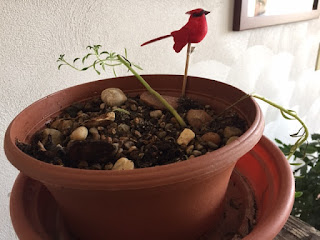
The succulent garden was beautiful, a present from a friend, and I managed to kill it. As the granddaughter of a master gardener, I have a pretty great opinion of my ability to nurture plants, indoors and out. My grandmother, Dagny Nelson, was such an avid gardener in Virginia, that she was honored for her work in Norfolk's public gardens. A nephew found a memorial stone in her honor last summer. So wow, there should be a genetic trait that helps nurture my own green thumb, right? That's true much of the time. But a recent failure hit home: The houseplant (photo above) was a gift from a girlfriend (sorry LuAnn!), and it was a beautiful combination of some of my favorite plants, succulents. I've blogged on the topic before (https://gardensirencall.blogspot.com/2019/07/rock-garden-good-choice-for-sloped.html) as I've planted several outdoors. The red hen-and-chicks are already coming up in the rock garden, thank you! In fact I got so enthusiastic about the ...

Fight the winter blues with Vinca

Image
Blooming Vinca in the top photo, located in a bay window that faces south and west;  Above, several Vinca plants in a big planter that also contains a palm tree. Visitors to my home in rural Scott County can't miss the number of plants inside during this frigid winter weather. The porch plants include a huge sanseveria and palm tree, coleus which is rooting in three separate vases, begonias I couldn't bear to kill, a hosta seedling and ... Vinca. For the first time I have overwintered several white Vincas with pink centers. I have a separate Vinca  now in a Valentine's Day planter, and 3-4 planted with the giant palm tree. They are doing just fine, so far. Formally called Catharanthus roseus, Vinca is grown as an annual plant in this part of the country. Vinca is also known as periwinkle, and comes in a variety of colors. The greens on the plants are evergreen, and the small flowers emerge in the spring and summer. The Vinca in our house do demand regu...

Reluctantly putting a garden to bed

Image
Daylilies and irises have been trimmed, and now, the tomato and the oriental lilies in foreground. Yet to go: Annual grass in rear, and hostas. The nights are cool, the sun has lost much of its warmth and it's high time to put the garden to bed. At our house, I capture as much of the gardens as physically possible and bring several plants back into the home. This year it's the big tropical plants we've owned for years, begonias, coleus, vinca and more. Last autumn a "Garden Siren Call" blog was published on how to correctly prepare gardens for winter. Find it here: https://gardensirencall.blogspot.com/2018/10/winterize-iowa-garden-or-two.html This year I'm admitting to a habit that results in all sorts of gardening work, indoors.  That includes watering, misting, moving plants from place-to-place. It makes indoor air more healthful but there is a down side: Today I found a cluster of insect worms, in a sac, on the scheffelera now located in the l...

Something old, something new: Serendipity in action

Image
Black-Eyed Susan flowers, or rudbeckia, weren't planted by a human How the space looks in autumn The Black-Eyed Susans are a family favorite but this year the blooms appeared unexpectedly in a new location some 50 yards from where the flowers were first established. It's serendipity ... with help likely from the birds. The flowers unexpectedly bloomed in a hosta bed near a gutter. This is at the front of our house, on the northeast side. Hostas are planted there because it generally doesn't receive a lot of sunshine. I didn't notice the move until the plants were pretty established. It was a nice surprise! The original site is far away on our acreage, in full sunshine. According to Aaron Steil, assistant director of the fabulous Reiman Gardens at Iowa State University in Ames, the Black-Eyed Susans, or rudbeckia, typically spread by runners from the original plant. It's very common, Steil wrote in an e-mail message, to see new plants pop up a few inc...

Wide gutters and border artistry

Image
New gutter by annuals in front of home The lines of the garden are drawn by shovel, not by using a pencil, but there does appear to be an artful edge involved. That thought occurred after reading about an artist who drew border lines freehand. These garden lines are cut from sod and adjacent to large cobblestones used in several areas of the yard. As written in previous blogs, there are thousands of "cobbies" in the Baker's yard, in large, medium and small sizes. They are used as borders to gardens, or in rock gardens. Husband Steve, who mows the grass, tries to mow as close as possible to the stones but says the wider the gutter, the easier it is. Well! Since one aim is to make the garden easier to maintain, the plan is to cut wide gutters around the yard. This will take a season or two, to accomplish. The time to do this most easily is in September. This season the side and front of the house were cut and the results gained rave reviews. The newest ones ar...

Monarch butterfly unexpectedly appears

Image
Monarch butterfly among the hosta fronds One recent gardening project included dividing over-grown hosta plants and planting divisions in new parts of the yard. It is arduous work indeed, but it started with a surprise. I was shoveling under a lime-green hosta, getting under the roots, when an adult monarch butterfly suddenly appeared. A butterfly UNDER a hosta? Oh my! According to the Monarch Lab at the University of Minnesota (monarchlab.org), adult butterflies born in late summer and early fall might well be the ones who migrate to Mexico. The primary job of monarch adults is to mate and bear eggs. Monarch females are able to mate after they are 3-8 days old; the males and females may stay together for up to 16 hours, the lab website explains. Adults can mate several times in their life and those born in summer months live 3-5 weeks. But adults born in late summer/early fall are the ones who live up to nine months, and they make a treacherous journey to Mexico. The U....

About that former tall birch tree ...

Image
The renovation effort, in progress. Stones were rearranged, etc. All done, and the grassy area was being watered The tall white birch tree came down several weeks ago but the spot where it lay is now rejuvenated. Yes, it took some thought, muscle power and a little cost, but the space has been re-jiggered and filled with what used to be called: "a little old, a little new, something borrowed and something blue." The garden itself was very spacious, so I felt comfortable in cutting it off and adding grass seed at one end. In the new style, it features a hanging basket for instant color, two heucheras (also called coral bells which used to be there), a bit of mother-in-law's tongue, or sansevieria and some seed for morning glories. It's doubtful the morning glory seeds will have time to grow, but it was a simple 99-cent investment, and who knows what kind of weather we'll have this fall. Otherwise, the grass seed was watered on a regular basis and is ...